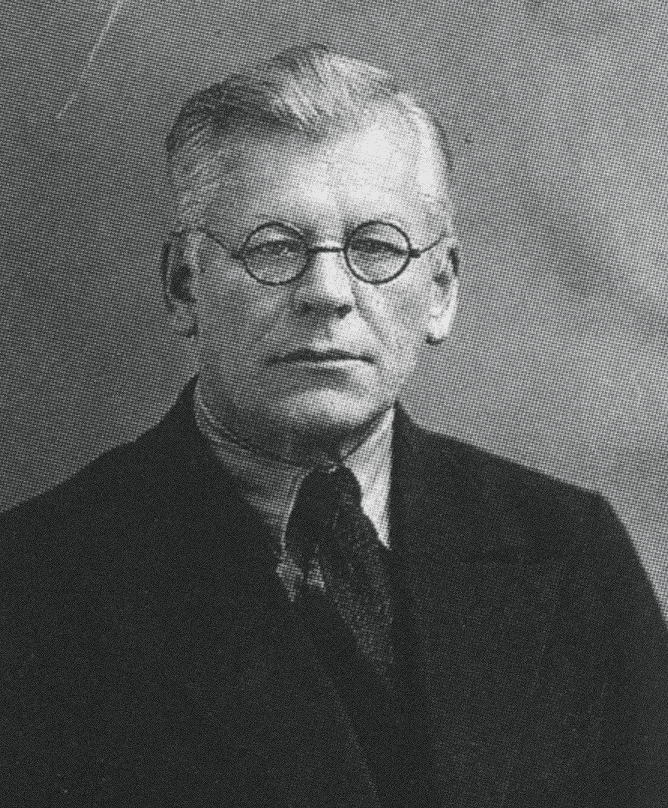
Born in 1885, a native of the village of Kadam, Vyatka Province. In 1910, he graduated with honors from the Medical Faculty of Kazan University, then returned to his homeland, where he worked as a zemstvo (rural district) doctor. He performed the duties of a surgeon, traumatologist, obstetrician, ophthalmologist, and many others.
In 1914, he was mobilized into the Tsarist Army. He became assistant divisional doctor of the 73rd Division, and later the chief doctor of the field dressing detachment of the 73rd Infantry Division on the German front. For his service, he was awarded the Order of Saint Stanislaus. In August 1919, he was mobilized into the Red Army in the town of Urzhum. He served as senior resident, chief physician, and consulting surgeon at the Red Cross hospital. With this hospital, he arrived in Tyumen together with Red Army units fighting against Admiral Kolchak at the end of December 1919.
At the beginning of the Great Patriotic War and until 1944, Nikolai Vasilyevich Sushkov served as chief medical officer and leading surgeon of Evacuation Hospital No. 1500, while continuing his consulting work at the city hospital. The first wounded began arriving around the 20th of July 1941. Hospital No. 1500 became the main sorting facility, receiving the wounded and distributing them according to the nature of their injuries.
One of Sushkov’s most famous operations was the removal of a fragment from the carotid artery of a wounded soldier. The 28-year-old man had almost no chance of survival, but after Sushkov’s incredible operation, he not only lived but returned to his unit.
Nikolai Vasilyevich managed to work in many areas. Even under the harshest wartime conditions, when surgeries followed one after another, he lectured students of the Kuban Medical Institute, which had been evacuated to Tyumen in December 1942.
With the help of the institute’s scientists and teachers, who immediately began practical work, a blood transfusion service was established. City doctors called on people to become donors. Nikolai Sushkov delivered lectures on the topic, accompanied by filmstrips. Soon there were already 50 registered donors. Many doctors and nurses gave their blood to the wounded during work hours in emergencies and, after donating, remained at their posts.
During the year the Kuban Medical Institute was located in Tyumen, its staff continued medical, teaching, and educational work to train doctors. At the end of the academic year, the state examination commission graduated 38 doctors, four of them with honors.
After the war, surgeon Sushkov worked as head of the surgical and later the trauma departments of the Tyumen Regional Hospital until his retirement in December 1957, and also as chief surgeon at the oncology dispensary. For many years, Nikolai Vasilyevich served as the chief surgeon of the Tyumen Region. He widely used plastic reconstructive surgery in the treatment of the wounded and surgical methods in the treatment of pulmonary tuberculosis. In 1956, the first bilobectomy and pneumonectomy for lung cancer were performed under his leadership.
For his selfless work in military hospitals, the doctor was awarded the Order of the Red Star and the Medal “For Valiant Labor in the Great Patriotic War.” He lived for 77 years and died in 1961 or 1962.
Immortal Rear [Electronic resource] URL: https://vk.com/wall-210767825_23 (accessed: 03.11.2025).